
This Daily Habit Could Cut Your Heart Risk by 30%


What if improving your cardiovascular health didn’t require spending hours at the gym? 🤔
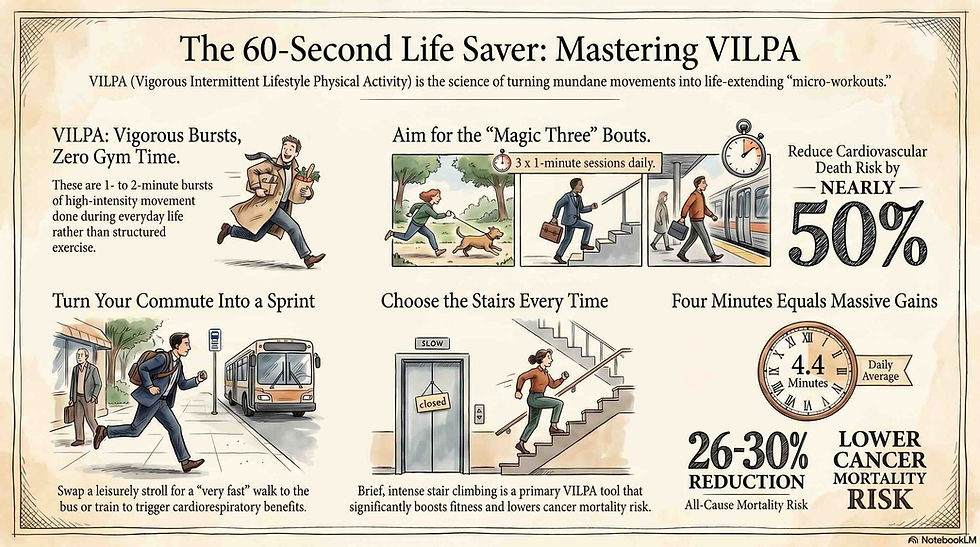
A fascinating study published in Nature Medicine suggests that very short bursts of vigorous movement integrated into normal daily life may significantly reduce the risk of cardiovascular disease and premature death.
Researchers call this concept:
VILPA — Vigorous Intermittent Lifestyle Physical Activity
And the exciting part?
You may already be doing some of it without realizing it.
🧠 What Is VILPA?
VILPA stands for:
Vigorous Intermittent Lifestyle Physical Activity
This means:
✅ short bursts of movement
✅ done during normal daily life
✅ intense enough to noticeably increase breathing and heart rate
✅ usually lasting from 20 seconds to 2 minutes
Examples include:
climbing stairs quickly 🪜
walking uphill briskly 🚶
carrying groceries rapidly 🛍️
rushing to catch a bus 🚌
energetic house cleaning 🧹
fast gardening work 🌱
playing actively with children or pets 🐕
short powerful walks during errands
The key idea:
👉 You do NOT need a formal workout.
Instead, small “huffing and puffing” moments throughout the day may still provide meaningful cardiovascular benefits.
🔬 What Did the Research Find?
The study analyzed more than 25,000 adults from the UK Biobank who did not participate in structured exercise. Participants wore activity trackers that measured movement patterns objectively.
Researchers discovered something remarkable:
Just 3–4 short bursts of vigorous activity per day were linked to:
❤️ lower cardiovascular mortality risk
❤️ lower cancer mortality risk
❤️ lower overall mortality risk
The median amount of VILPA in the study was only about:
4.4 minutes per day
Yet this small amount was associated with:
26–30% lower all-cause mortality risk
32–34% lower cardiovascular mortality risk
up to 40% lower cancer mortality risk in some analyses
That is a surprisingly large benefit for such a tiny amount of activity.
💡 Why Might VILPA Work So Well?
Researchers believe VILPA may improve:
✅ cardiorespiratory fitness
✅ insulin sensitivity
✅ blood vessel function
✅ metabolic health
✅ mitochondrial function
✅ blood pressure regulation
Short intense efforts can stimulate the cardiovascular system similarly to interval training — but without requiring a dedicated workout session.
This is especially important for people who:
don’t enjoy traditional exercise
feel they “don’t have time”
struggle with motivation
are older adults easing into activity
want practical ways to improve heart health
❤️ Why This Matters for Blood Pressure
One of the biggest drivers of healthy blood pressure is maintaining good cardiovascular fitness.
Even brief vigorous movement can:
✅ improve circulation
✅ improve vascular flexibility
✅ reduce sedentary time
✅ improve glucose metabolism
✅ support healthy weight management
✅ improve stress resilience
Over time, these changes may contribute to healthier blood pressure trends.
This aligns with modern cardiovascular guidelines emphasizing that:
“All movement counts.” 🚶⚡
🏡 3 Simple Ways to Use VILPA in Everyday Life
The beauty of VILPA is that it can fit naturally into your day.
Here are 3 practical ways to implement it.
1️⃣ Turn Stairs Into Mini Cardio Sessions 🪜🔥
Instead of casually walking upstairs:
👉 climb briskly for 30–60 seconds
You should feel:
breathing noticeably harder
mild “huffing and puffing”
elevated heart rate
You do NOT need to sprint dangerously.
Simply increasing intensity safely is enough.
💡 Easy strategy:
choose stairs over elevators
do one “power climb” several times daily
hold the handrail if needed for safety
This is one of the easiest VILPA habits to build.
2️⃣ Add “Power Walking Bursts” During Daily Tasks 🚶⚡
Most people already walk during the day.
The trick is:
👉 occasionally increase the intensity.
Examples:
walk rapidly while shopping
speed up for 1 minute during errands
walk uphill briskly
carry bags with purpose
walk faster between meetings
Even tiny bursts matter.
You don’t need special clothes, equipment, or a gym membership.
Just brief intentional intensity.
3️⃣ Use Short Follow-Along Exercise Sessions at Home with BreathNow app 🏠💪
One of the easiest ways to introduce VILPA intentionally is through short guided exercise sessions.
Examples:
fast marching in place
bodyweight squats
wall sits
low-impact cardio intervals
stair stepping
brisk walking circuits
short isometric exercise sessions
This is where BreathNow can help.
The app includes:
✅ follow-along movement videos
✅ breathing exercises for stress reduction
✅ walking and cardio guidance
✅ HRV and heart health tracking
✅ Apple Health integration ✅ tools to observe how activity impacts cardiovascular trends over time
By monitoring heart rate trends, HRV, and recovery patterns, users can better understand how different movement habits affect their cardiovascular health.
Even small bursts of movement may produce noticeable changes in:
energy levels
stress response
heart rate recovery
long-term fitness trends
⚠️ Important Safety Note
VILPA does NOT mean “go all out.”
The goal is:
✅ short periods of noticeably harder effort
✅ performed safely
✅ matched to your current fitness level
If you have:
cardiovascular disease
uncontrolled hypertension
chest pain
significant joint problems
balance issues
talk with your healthcare provider before starting vigorous activity.
Older adults may still benefit greatly from modest intensity increases performed safely.
🌟 The Big Takeaway
This research sends an encouraging message:
You do not need perfect workouts to improve your health.
Tiny bursts of vigorous movement woven into normal life may provide surprisingly meaningful cardiovascular benefits.
That makes VILPA:
✅ practical
✅ accessible
✅ time-efficient
✅ sustainable
For many people, this may be far easier than trying to follow a complicated exercise plan.
And over months and years, those tiny moments of movement may add up to major heart health benefits. ❤️
Frequently Asked Questions (FAQ)
What is VILPA?
VILPA stands for Vigorous Intermittent Lifestyle Physical Activity. It refers to short bursts of vigorous movement performed during everyday activities such as climbing stairs, carrying groceries, or walking uphill.
How much VILPA do I need each day?
The Nature Medicine study found significant health benefits from as little as 3–4 minutes of VILPA per day. The average participant accumulated about 4.4 minutes daily.
Can VILPA improve heart health?
Research suggests that regular VILPA may improve cardiovascular fitness, blood vessel function, metabolic health, and blood pressure regulation, all of which contribute to better heart health.
Does VILPA lower the risk of heart disease?
The study found that people who accumulated a few minutes of VILPA daily had approximately 30% lower cardiovascular mortality risk compared with those who performed little or no vigorous lifestyle activity.
What activities count as VILPA?
Examples include climbing stairs briskly, carrying heavy shopping bags, fast walking uphill, energetic gardening, vigorous housework, and other short bursts of effort that noticeably increase breathing and heart rate.
Is VILPA the same as exercise?
Not exactly. Traditional exercise is usually planned and structured, while VILPA occurs naturally during daily life. Both can improve health, but VILPA is often easier to fit into a busy schedule.
Can walking count as VILPA?
Yes. Walking can count as VILPA when performed at a brisk pace or uphill, causing a noticeable increase in breathing and heart rate.
Can older adults benefit from VILPA?
Yes. Older adults may benefit significantly from safely increasing the intensity of everyday movements. Even short bursts of activity can help support cardiovascular health and physical function.
Can VILPA help with blood pressure?
While the study focused on mortality risk, vigorous movement may support healthy blood pressure by improving cardiovascular fitness, circulation, vascular function, and metabolic health.
Do I need a gym or special equipment?
No. One of the biggest advantages of VILPA is that it can be incorporated into normal daily activities without a gym membership or exercise equipment.
How can I track my VILPA activity?
Many smartwatches and fitness trackers can monitor heart rate, movement intensity, activity duration, and recovery. These metrics can help identify periods of vigorous activity throughout the day.
How can BreathNow app help?
BreathNow provides guided exercise, walking, stretching, and breathing sessions, along with heart rate and HRV tracking. The app can help users understand how daily movement habits affect cardiovascular health over time.

