
Can you lower blood pressure with 478 breathing?

Updated: Feb 2
Short answer: yes—when done correctly and consistently. The 4-7-8 breathing exercise is one of the most researched breathing exercises for high blood pressure. Follow the 3 minute video below and see for yourself why hundreds of viewers enjoy it when they need to reduce blood pressure.
The 4-7-8 breathing exercise activates the parasympathetic nervous system, reduces stress hormones, and support healthier blood pressure levels over time.
In this guide, you’ll learn why breathing to lower blood pressure works, how 4-7-8 breathing affects your heart and blood vessels, exactly how to do it, and how to track real results using BreathNow on iPhone and Apple Watch.
Why Breathing Exercises Help Lower Blood Pressure 🧠🩺
Blood pressure isn’t just about arteries—it’s tightly linked to your nervous system.
When you’re stressed:
Your breathing becomes fast and shallow
Sympathetic (“fight-or-flight”) activity rises
Blood vessels constrict
Blood pressure increases
Slow, controlled breathing reverses this process by:
Activating the vagus nerve [1]
Increasing parasympathetic tone
Improving baroreflex sensitivity
Lowering resting heart rate and vascular resistance
👉 That’s why breathing exercises to lower blood pressure are recommended by many cardiology and hypertension guidelines as a safe, drug-free adjunct.
What Is 4-7-8 Breathing? ⏱️
4-7-8 breathing (sometimes written as 478 breathing) is a structured breathing pattern that slows respiration to an optimal range for cardiovascular regulation.
The Pattern
Inhale through your nose for 4 seconds
Hold your breath for 7 seconds
Exhale slowly through your mouth for 8 seconds
One full cycle lasts 19 seconds.
Just 4–6 cycles can meaningfully shift your nervous system toward relaxation.
How 4-7-8 Breathing Lowers Blood Pressure 🔬
Scientific studies show that slow breathing exercises:
Reduce systolic and diastolic blood pressure
Increase heart rate variability (HRV)
Lower circulating cortisol
Improve endothelial function
Importantly, the extended exhale (8 seconds) is key—it:
Enhances vagal activation
Reduces sympathetic output [2]
Signals safety to the brain
👉 This is why 4-7-8 breathing exercise is often more effective than generic “deep breathing.”

How to Perform the 4-7-8 Breathing Exercise (Step-by-Step) 🫁
Sit or lie down comfortably
Place the tip of your tongue behind your upper front teeth
Inhale through your nose (4 seconds)
Hold your breath (7 seconds)
Exhale slowly through your mouth (8 seconds) with a soft “whoosh”
Repeat 4–6 cycles
✅ Best practices
Practice twice daily
Avoid forceful breathing
Stop if you feel dizzy (mild lightheadedness is normal at first)
How Long Does It Take to See Results? ⏳
Immediate: calmer heart rate, reduced stress
1–2 weeks: improved resting BP trends
4–8 weeks: clinically meaningful BP reduction (when consistent)
Consistency matters more than intensity.
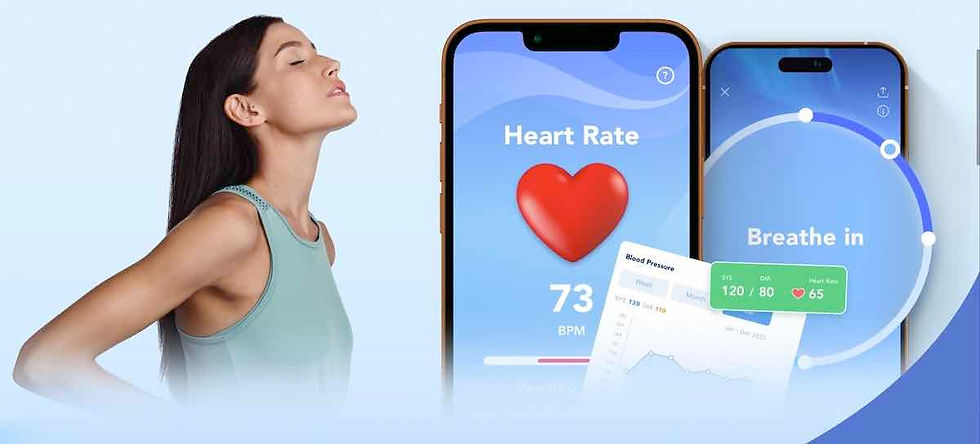
Why Use BreathNow app for Blood Pressure Breathing Exercises 📱⌚
Doing breathing exercises is powerful—but tracking makes it transformative.
With BreathNow, you can:
📊 Log and visualize blood pressure trends
⌚ Practice guided breathing exercises on Apple Watch
❤️ Monitor heart rate & HRV during sessions
🧠 Build daily habits with reminders and coaching
This turns breathing exercise to lower blood pressure from a guess into a measurable routine.
Who Should Try 4-7-8 Breathing? 👥
This technique is especially helpful for:
People with elevated or stage 1 hypertension
Stress-related blood pressure spikes
Poor sleep or anxiety-linked BP variability [3]
Anyone seeking natural blood pressure support
(Always consult your clinician—breathing complements, not replaces, medical care.)
FAQ: 4-7-8 Breathing & Blood Pressure ❓
1. Can breathing exercises really lower blood pressure?
Yes. Multiple studies show that slow breathing exercises can lower systolic and diastolic BP, especially when practiced daily.
2. Is 4-7-8 breathing safe for everyone?
For most people, yes. If you have severe lung disease, arrhythmias, or feel dizzy, consult a healthcare professional.
3. How often should I do 4-7-8 breathing?
Ideally twice per day, or whenever stress causes BP to rise.
4. How is 4-7-8 different from deep breathing?
The structured timing and long exhale make 4-7-8 more effective for nervous system regulation.
5. Can this replace blood pressure medication?
No. It’s a complementary tool, not a substitute for prescribed treatment.
6. Does it lower systolic or diastolic pressure more?
Studies suggest benefits for both, with stronger effects on systolic BP.
7. How quickly does blood pressure drop after breathing?
Acute reductions can happen within minutes, with stronger effects over weeks.
8. Can I do 4-7-8 breathing lying down?
Yes—many people prefer it before sleep.
9. Is Apple Watch useful for breathing exercises?
Yes. It helps track & visualize heart rate and blood pressure, though taking BP readings still requires an external blood pressure monitor.
10. Why track breathing and BP together in an app?
Because trends—not single readings—show whether breathing to lower blood pressure is working for you. Also BreathNow app provides off-line breathing guidance both on iPhone and Apple Watch.
References:
